Senior Fitness After 50: It's Never Too Late to Get Stronger
Senior Fitness After 50: It's Never Too Late to Get Stronger
What if I told you that you could start strength training in your 60s and still be benefiting from it in your 90s?
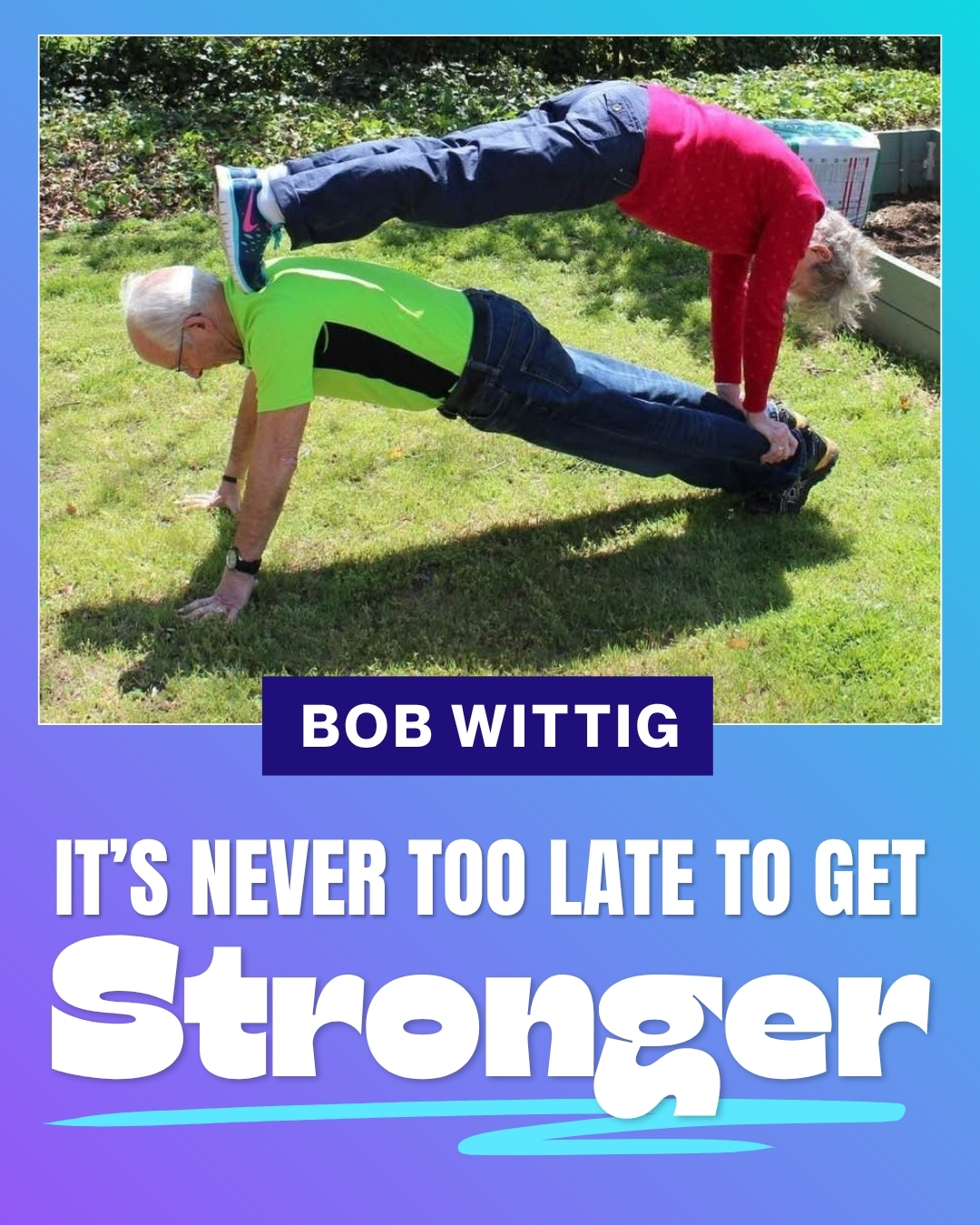
Meet Bob Wittig.
Bob is 92 years old. He works out three times a week, mows his own lawn, and enjoys spending time with his grandchildren and great-grandchildren.
But here's the part of his story I really love.
Bob didn't start lifting weights until he was 61.
He's now been strength training consistently for 31 years.
After retiring from General Motors, Bob discovered the benefits of working out and decided to stick with it.
"If there's one thing I am, it's disciplined, and when I get into something and I see the benefit of it, it's going to stay," he toldGeezer Jock.
"It's going to be a keeper."
I love that attitude.
Bob didn't spend his entire life preparing to be a strong 92-year-old. He started something new at 61, discovered that it helped him, and kept going.
His story reminds us of something important:
You may be capable of much more than you think, even if you haven't started yet.
Your Muscles Don't Have an Expiration Date
As we get older, maintaining muscle becomes increasingly important.
Adults naturally tend to lose muscle mass and strength with age, and inactivity can make that decline worse.
You may notice it in ways that seem unrelated to fitness at first.
Getting out of a low chair becomes harder.
Carrying groceries takes more effort.
Stairs feel more challenging.
Getting up from the floor requires a little more planning.
These changes can affect more than your workout. They can affect how freely you move through your everyday life.
The good news?
Older adults can build strength through appropriately designed resistance training.
You don't have to be 25.
You don't have to have a history of working out.
And you don't have to start with heavy weights.
Strength training gives your muscles a reason to adapt. Over time, with consistent practice and appropriate progression, you can improve your strength and physical abilities.
The goal isn't to turn back the clock.
It's to help your body do more of what you want it to do today—and in the years ahead.
It's Not Too Late to Get Stronger
Whether you're starting at 60, 70, 80, or beyond, we'll help you discover what your body can do and build strength at your own pace.
No experience needed. We'll meet you where you are and help you progress from there.
Strength Is About More Than Lifting Weights
Let's be honest. Most of us aren't walking around thinking about how many pounds we can lift.
We're thinking about our lives.
We want to carry our own bags.
Walk through an airport without worrying about every step.
Get up from a chair without using our hands.
Work in the garden.
Play with the grandkids.
Travel, hike, golf, dance, or enjoy whatever activities make life fun.
That's where strength training comes in.
The real benefit of getting stronger is what that strength allows you to do outside the gym.
When you practice standing up from a chair, lifting a weight, or carrying something safely, you're developing abilities that can support everyday tasks.
Strength training can also help maintain muscle and support bone health as you age.
And when your workouts are designed around your current abilities, you can work toward meaningful goals without needing to compete with anyone else.
You aren't training for someone else's life.
You're training for yours.
You Don't Have to Work Out Like Bob
Bob exercises three times a week and has maintained his routine for decades.
That's wonderful.
But you don't need to copy his workout to benefit from strength training.
You don't need 60- to 90-minute sessions.
You don't need to lift heavy weights.
And you certainly don't need to feel bad if you can't do what a 92-year-old fitness enthusiast does!
Your starting point should reflect your current strength, mobility, balance, health, and experience.
For many adults, two strength-training sessions per week can be a useful starting goal, consistent with general physical activity recommendations. Your individual program may need to be adjusted for your abilities or medical circumstances.
The important things are to begin appropriately, learn good technique, and build gradually.
Some people start with bodyweight movements or light resistance.
Others may be ready for more challenging exercises.
The right approach is the one that helps you progress safely and consistently.
And if you have a medical condition, significant pain, or physical limitations, a qualified professional can help you determine what modifications may be appropriate.
Consistency Beats the Perfect Workout
One of the most impressive things about Bob isn't his age.
It's his consistency.
Thirty-one years of strength training didn't happen because every workout was perfect. It happened because he kept showing up.
That's a lesson worth borrowing.
You don't need to feel motivated every day.
You don't need to set a personal record every week.
You don't need to leave the gym exhausted to know you've accomplished something.
You need a realistic routine that fits your life and gives you a reason to come back.
Some days you'll feel strong.
Some days you'll need to adjust.
Some days, simply showing up will be the win.
That's okay.
The goal isn't to have one spectacular workout. It's to build a habit that serves you for years.
The Best Reason to Get Stronger? Your Life Outside the Gym
Bob wants to keep working out with his children, grandchildren, and great-grandchildren.
That's a pretty wonderful reason to stay active.
And it highlights something that can get lost when we focus too much on exercise programs, repetitions, and muscle measurements.
Fitness isn't just about what happens during a workout.
It's about what happens afterward.
It's being able to join your family for an outing.
Enjoy a hobby without feeling limited by your physical abilities.
Keep doing things around your home.
Feel more confident moving through the world.
And have more opportunities to say yes when something sounds fun.
That's what we mean by Physical Freedom: having the physical ability to participate in the life you want to live.
You can't control every aspect of aging. But you can take steps to maintain your strength, work on your balance, and keep your body moving.
You can begin where you are.
And you can keep building from there.
Your Next Chapter Can Start Today
Maybe you're 55 and have never lifted a weight.
Maybe you're 68 and haven't exercised in years.
Maybe you're 79 and wondering whether it's worth starting now.
Or perhaps you're already active and want to maintain what you've worked so hard to build.
Wherever you are, don't assume you've missed your opportunity.
Bob began strength training at 61. Three decades later, he was still enjoying the habit and the life it helped him support.
Your journey won't look exactly like his.
It doesn't have to.
You don't need to be 92 to appreciate the benefits of getting stronger. And you don't need to wait until something becomes difficult before you start working on it.
Start with an appropriate challenge.
Learn the movements.
Keep showing up.
Celebrate the improvements, even the small ones.
Because the goal isn't to prove that you're young.
It's to keep building a body that helps you live well at the age you are.
It's never too late to discover what you're capable of.
And your next chapter of strength can begin today.
Ready to Build Your Strength?
Let's help you build the strength, confidence, and physical freedom to keep doing the things you love.
You don't have to be strong to start. You just have to be willing to take the first step.

Start Getting In Better Shape

Submit Your Info
Get to know each other. Learn about our program. Get a personalized plan.

Submit Your Info
Get to know each other. Learn about our program. Get a personalized plan.

Follow Our Plan
Exercise at least 3x/wk, follow our nutrition steps, communicate with your coach.
Follow Our Plan
Exercise at least 3x/wk, follow our nutrition steps, communicate with your coach.

Reach Your Goal
Love the way you look, feel strong, fit, and live more active.
Reach Your Goal
Love the way you look, feel strong, fit, and live life on your terms!
About Us
We help seniors take the guesswork out of exercise so they can achieve their fitness goals. With our coaching program, you will confidently workout, nourish your body, and stay committed to your goals, without spending a fortune on a personal trainer.
Do you want help transforming your body and fitness?
Affiliations


2024 Copyright © Desert Fitness Collective: Senior Fitness in Palm Desert
About Us
We’ll help you take the guesswork out of staying in shape so you can achieve your fitness goals. With our coaching program, you will confidently exercise, meal plan, and stay committed to your goals, without spending a fortune on a personal trainer.
Do you want help to transform your body and fitness?
Affiliations