Feel the Freedom: Why Dancing Is the Most Powerful Activity for Senior Brain Health
Feel the Freedom — Why Dancing Together Is One of the Best Things You Can Do for Your Body and Brain
Of All the Physical Activities Studied, Only One Significantly Reduced Dementia Risk
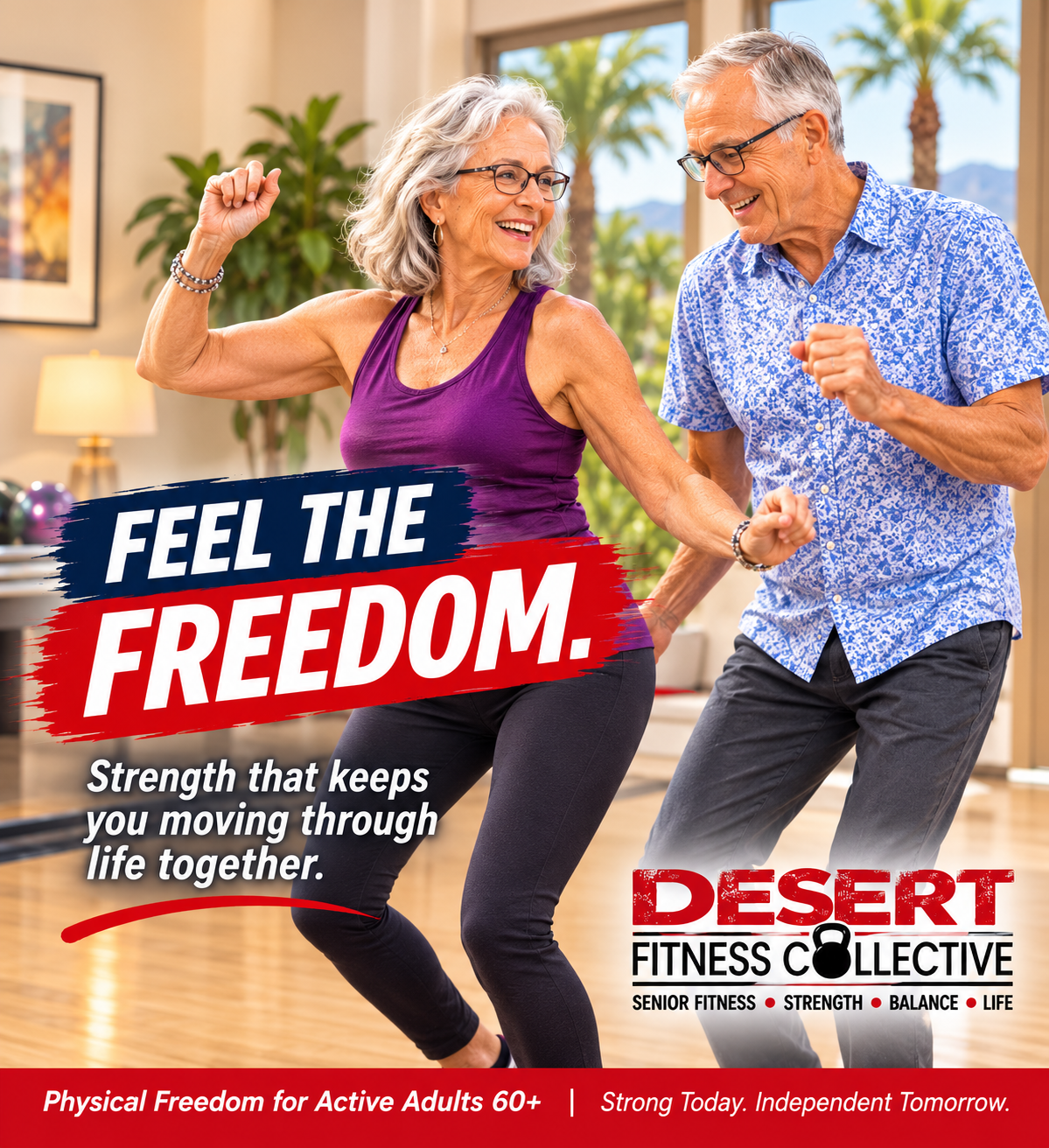
Look at them.
Living room floor. Big smiles. Moving together — laughing, fully present, neither of them thinking about anything except this moment and each other.
That is Physical Freedom at its most joyful.
And it turns out, it may also be one of the most powerful things they could be doing for their health.
The Finding That Stopped Researchers
The Bronx Aging Study followed 469 older adults without dementia for years, tracking their leisure activities and monitoring who developed cognitive decline.
The researchers looked at a wide range of physical activities: cycling, swimming, golf, tennis, walking, climbing stairs.
Of all of them, only one showed a statistically significant association with lower dementia risk.
Dancing.
Participants who danced frequently — defined as more than once a week — were 76% less likely to develop dementia compared to those who danced infrequently or not at all.
76%.
That is not a modest effect. That is one of the strongest associations between a leisure activity and dementia prevention in the literature. And it held after controlling for other health behaviors and baseline cognitive function.
The researchers were clear: this is an observational study, not a controlled trial. It doesn’t prove that dancing prevents dementia. But the finding makes biological sense — and the mechanism behind it is exactly what makes dancing unique among physical activities.
Why Dancing Is Different
Every activity in the Physical Freedom campaign has shown something specific that strength and fitness make possible.
Golf: rotational power and hip mobility.
Hiking: proprioception and cardiovascular reserve.
Pickleball: lateral quickness and reactive balance.
Bowling: eccentric knee control and grip endurance.
Dancing does something different from all of them.
It asks your brain and your body to work together in real time — simultaneously, continuously, with another person.
Dancing stimulates a large number of physiological processes at the same time: spatial orientation, movement coordination, balance, endurance, interaction and communication — all counteracting age-related declines in brain structure simultaneously.
This is why dancing shows up differently in cognitive research than other forms of exercise. Walking is automatic. Cycling follows a rhythm. Dancing requires constant decision-making: responding to a partner, adapting to music, navigating space, remembering patterns, anticipating what comes next.
It is, in the most literal sense, a full-brain workout wearing good shoes.
What It Does to the Body
The cognitive benefits are striking — but the physical evidence is equally strong.
A systematic review of the physical benefits of dancing for older adults found Grade B evidence that dancing significantly improves aerobic power, lower body muscle endurance, strength and flexibility, balance, agility, and gait in older adults.
Dancers showed 10% greater knee-extension strength and 10% greater grip strength than non-dancing peers — the same grip strength we’ve discussed at length as one of the most reliable predictors of functional independence and longevity.
Partner dance specifically — ballroom, social dance, any style that involves two people coordinating movement — improves balance and gait through a mechanism that solo exercise cannot fully replicate: the constant proprioceptive feedback of moving with another person, reading their weight shifts, adjusting your own balance in response.
Partner dance also significantly reduces fear of falling through improved physical self-efficacy — the confidence that comes from a body that has been repeatedly asked to move with precision and has responded.
And a 2024 meta-analysis of 218 studies published in the BMJ found that people who danced showed the largest improvements in depression — more than those who walked, jogged, or practiced yoga.
The Strength Behind the Dance
Here’s what most people don’t think about: dancing — especially partner dancing — requires the same physical foundation as everything else in this campaign.
Single-leg stability to transfer weight smoothly between steps without lurching.
Hip strength and mobility to rotate, pivot, and change direction without compensating at the lower back.
Core control to maintain posture and frame through sustained, dynamic movement.
Lower body endurance to sustain activity across a full song — or a full evening.
Reactive balance to adjust when a partner does something unexpected — the same quality that catches you before a stumble becomes a fall.
When those foundations are strong, the dance floor is available to you.
When they’re not, the dance floor becomes a place you watch from the edge.
The Partner Effect
This image shows something specific that none of the other Physical Freedom photos have shown: two people.
Moving together. Laughing together. Physically connected, in sync, completely present with each other.
Ballroom dance, as a partner-based group physical activity, may benefit middle-aged and older adults’ physical and mental health in ways that go beyond those associated with physical activity alone — through the unique combination of rhythmic movement, music, and social coordination that simultaneously engages physical, cognitive, and emotional systems.
The research on social isolation that we’ve covered before — 35% higher mortality risk, 50% greater odds of premature death without strong social connections — applies here in its most joyful possible form.
Dancing together isn’t just exercise.
It’s connection. It’s presence. It’s the kind of shared physical joy that research has struggled to quantify fully, because it isn’t just about what the body can do.
It’s about who you get to do it with.
Feel the Freedom
The golf course. The staircase. The grocery bags. The trail. The floor with the grandchildren. The bowling lane. The pickleball court. The garden.
And now this — a living room, a Saturday afternoon, two people who have built bodies capable of feeling this good in them.
Physical Freedom isn’t a destination. It’s a daily experience — one that changes depending on the day, the season, and the company.
Today it looks like this.
Feel it.
Strong Today. Independent Tomorrow. Free for Life.
Ready to build the body that keeps you dancing?
Click below to book your free discovery call.

Sources: Verghese et al., Bronx Aging Study, New England Journal of Medicine (2003) — frequent dancing, 76% lower dementia risk, only physical activity with statistically significant association; Keogh et al., Journal of Aging and Physical Activity (2009) — systematic review, Grade B evidence for strength, balance, aerobic, and gait improvements in older dancers; BMJ meta-analysis of 218 studies (2024) — largest depression reduction from dance vs. walking, jogging, yoga; Frontiers in Psychology (2026) — ballroom dance, partner coordination, social connection, positive aging; Frontiers in Sports and Active Living (2026) — ballroom dance, balance ability, reduced fear of falling, physical self-efficacy

Start Getting In Better Shape

Submit Your Info
Get to know each other. Learn about our program. Get a personalized plan.

Submit Your Info
Get to know each other. Learn about our program. Get a personalized plan.

Follow Our Plan
Exercise at least 3x/wk, follow our nutrition steps, communicate with your coach.
Follow Our Plan
Exercise at least 3x/wk, follow our nutrition steps, communicate with your coach.

Reach Your Goal
Love the way you look, feel strong, fit, and live more active.
Reach Your Goal
Love the way you look, feel strong, fit, and live life on your terms!
About Us
We help seniors take the guesswork out of exercise so they can achieve their fitness goals. With our coaching program, you will confidently workout, nourish your body, and stay committed to your goals, without spending a fortune on a personal trainer.
Do you want help transforming your body and fitness?
Affiliations


2024 Copyright © Desert Fitness Collective: Senior Fitness in Palm Desert
About Us
We’ll help you take the guesswork out of staying in shape so you can achieve your fitness goals. With our coaching program, you will confidently exercise, meal plan, and stay committed to your goals, without spending a fortune on a personal trainer.
Do you want help to transform your body and fitness?
Affiliations