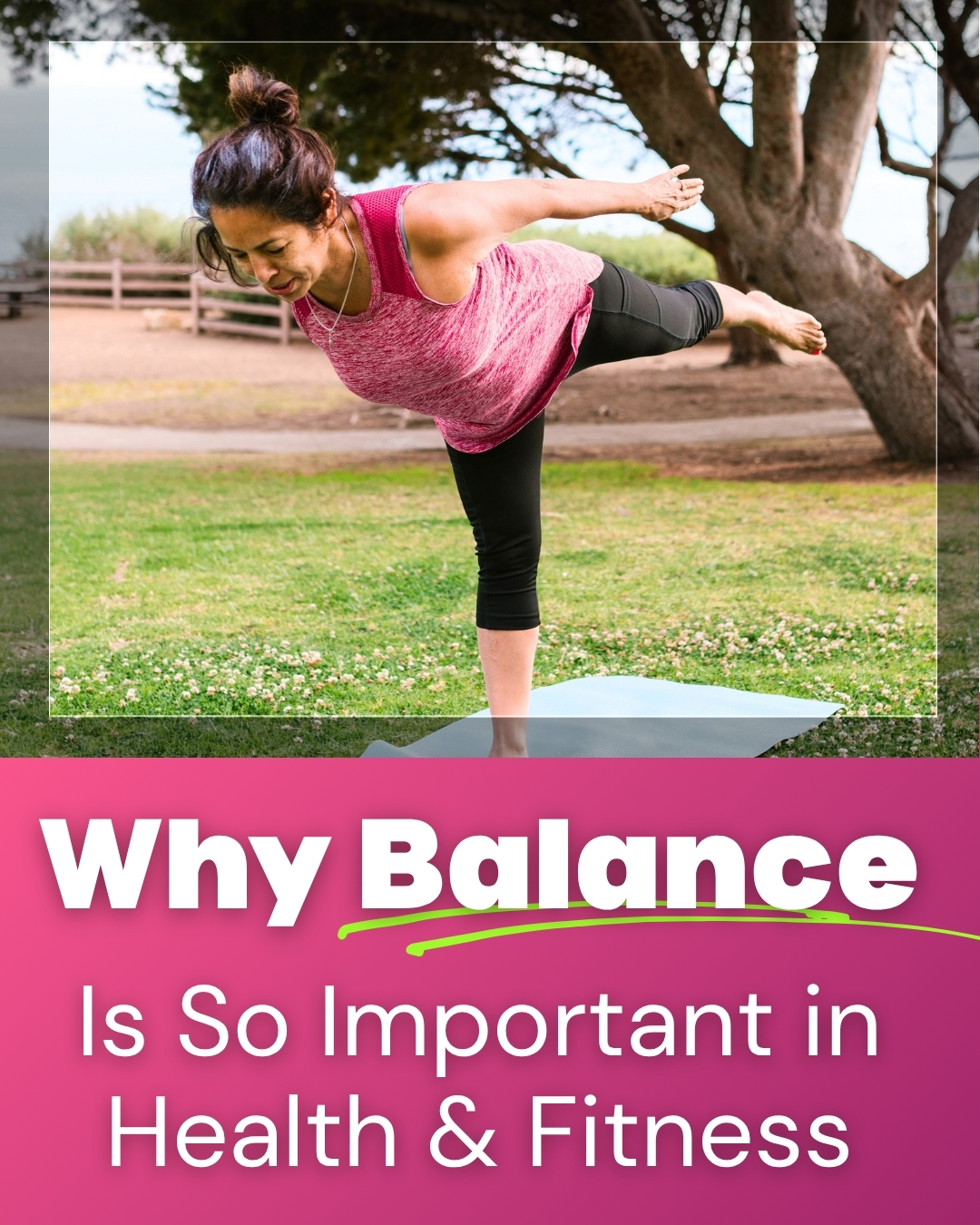
Senior Fitness After 50: Why Balance Is So Important for Your Health
Senior Fitness After 50: Why Balance Is So Important for Your Health
Balance problems often get filed under"getting old."
Something to worry about later.
Something you can't do much about.
But here's the truth:
Balance is a fitness skill.
And like strength, mobility, and endurance, it can be trained.
The decline in balance can begin before you notice obvious problems. That's one reason it's worth working on before you find yourself struggling to stay steady.
Good balance helps you do more than avoid falls.
It helps you keep doing the things you enjoy.
Hiking.
Traveling.
Playing golf.
Playing pickleball.
Walking through a crowded airport.
Navigating an uneven sidewalk.
Getting up and moving confidently through everyday life.
That's why balance deserves a place in your fitness routine.
Balance Becomes More Important With Age
Falls aren't a minor concern for older adults.
The CDC reports that more than one in four adults 65 and older falls each year, and falls are the leading cause of injury for this age group.
But here's the encouraging part:
You don't have to wait until you're having balance problems to work on your balance.
The earlier you train it, the more opportunity you have to maintain this important physical ability.
Balance Is More Than Just Standing on One Foot
When most people hear "balance training," they picture someone standing on one leg.
That's certainly one way to challenge balance.
But real-world balance is much more complicated.
Imagine catching your foot on a curb.
Your body has to:
Recognize what's happening
React quickly
Shift your weight
Control your movement
Stabilize yourself
Have enough strength to recover
That's balance, coordination, reaction time, strength, and body awareness working together.
And that's why balance shouldn't be treated as an isolated skill.
A New Way to Think About Fitness
The American College of Sports Medicine describes neuromotor exercise as training that involves skills such as balance, coordination, agility, and proprioception—the body's awareness of where it is in space.
These abilities are constantly working together.
You don't think about them when you're walking across your living room.
But when the ground changes, you step around an obstacle, or you suddenly lose your footing, your body has to respond.
The better prepared it is, the better it can respond.
Don't Wait Until Balance Becomes a Problem
You don't have to be unsteady to start training your balance—building these skills now can help you stay confident on your feet for years to come.
We'll meet you at your current fitness level and safely challenge your balance, strength, and mobility as you progress.
Strength Is Part of the Balance Equation
Balance isn't just about your nervous system.
Strength matters.
Strong legs, hips, and core muscles help stabilize your body and control your movements.
Think about getting up from a chair.
Walking up stairs.
Stepping over something on the floor.
Changing direction.
Recovering when you stumble.
Those movements require your muscles to respond quickly and effectively.
Many strength exercises also challenge balance and coordination, which means you can train several aspects of fitness at the same time.
That's one reason a well-designed strength program is so valuable as you age.
Challenge Your Balance in Different Ways
Balance doesn't have to mean standing perfectly still.
You can challenge it by:
Standing on one leg
Stepping in different directions
Changing direction while walking
Practicing controlled weight shifts
Performing exercises that require stability
Moving at different speeds
Navigating different surfaces safely
The goal isn't to make every exercise difficult.
It's to give your body opportunities to practice responding to movement and changes in position.
Yoga, Pilates, and Tai Chi Can Help, Too
There isn't just one way to improve balance.
Yoga
Yoga can combine balance, strength, flexibility, and mobility. Many poses can also be modified to accommodate different fitness levels.
Pilates
Pilates emphasizes core strength, controlled movement, and body awareness—all useful components of physical stability.
Tai Chi
Tai chi uses slow, deliberate movements and controlled weight shifts to challenge balance and coordination.
Research has found that tai chi and other exercise programs incorporating balance training can help reduce fall risk among older adults.
You don't have to choose just one.
The best approach is often the one you enjoy enough to do consistently.
Don't Forget Mobility
There's another piece of the balance puzzle that often gets overlooked:
Mobility.
Your body needs to be able to move through an appropriate range of motion so you can adjust your position when circumstances change.
Your ankles.
Your hips.
Your knees.
Your spine.
All contribute to how you move and respond to the world around you.
Strength, balance, and mobility aren't separate compartments.
They support one another.
Better strength can improve your ability to control movement.
Better mobility can make movement easier.
Better balance can increase confidence.
Together, they help you move through life more effectively.
Balance Is a Skill You Can Keep Training
You don't have to wait until you're 65.
Or 75.
Or until you experience your first fall.
Start now.
Just like strength and endurance, balance responds to regular practice.
And the goal isn't simply to avoid falling.
It's much bigger than that.
The goal is to remain confident enough to keep doing the things you love.
Travel.
Golf.
Pickleball.
Hiking.
Gardening.
Dancing.
Playing with your grandchildren.
Whateveryourversion of an active life looks like.
That's what we're really training for.
Stay Steady. Stay Strong. Stay Independent.
Your goal isn't just to avoid falling—it's to keep moving confidently and doing the things you love for as long as possible.
Our whole-body approach helps you build the strength, balance, mobility, and stamina you need for everyday life.
Sources
Centers for Disease Control and Prevention. Falls and fall-related statistics among older adults.
American College of Sports Medicine. Physical activity and neuromotor/functional fitness guidance.
Centers for Disease Control and Prevention. Older adult physical activity and fall-prevention guidance.

Start Getting In Better Shape

Submit Your Info
Get to know each other. Learn about our program. Get a personalized plan.

Submit Your Info
Get to know each other. Learn about our program. Get a personalized plan.

Follow Our Plan
Exercise at least 3x/wk, follow our nutrition steps, communicate with your coach.
Follow Our Plan
Exercise at least 3x/wk, follow our nutrition steps, communicate with your coach.

Reach Your Goal
Love the way you look, feel strong, fit, and live more active.
Reach Your Goal
Love the way you look, feel strong, fit, and live life on your terms!
About Us
We help seniors take the guesswork out of exercise so they can achieve their fitness goals. With our coaching program, you will confidently workout, nourish your body, and stay committed to your goals, without spending a fortune on a personal trainer.
Do you want help transforming your body and fitness?
Affiliations


2024 Copyright © Desert Fitness Collective: Senior Fitness in Palm Desert
About Us
We’ll help you take the guesswork out of staying in shape so you can achieve your fitness goals. With our coaching program, you will confidently exercise, meal plan, and stay committed to your goals, without spending a fortune on a personal trainer.
Do you want help to transform your body and fitness?
Affiliations