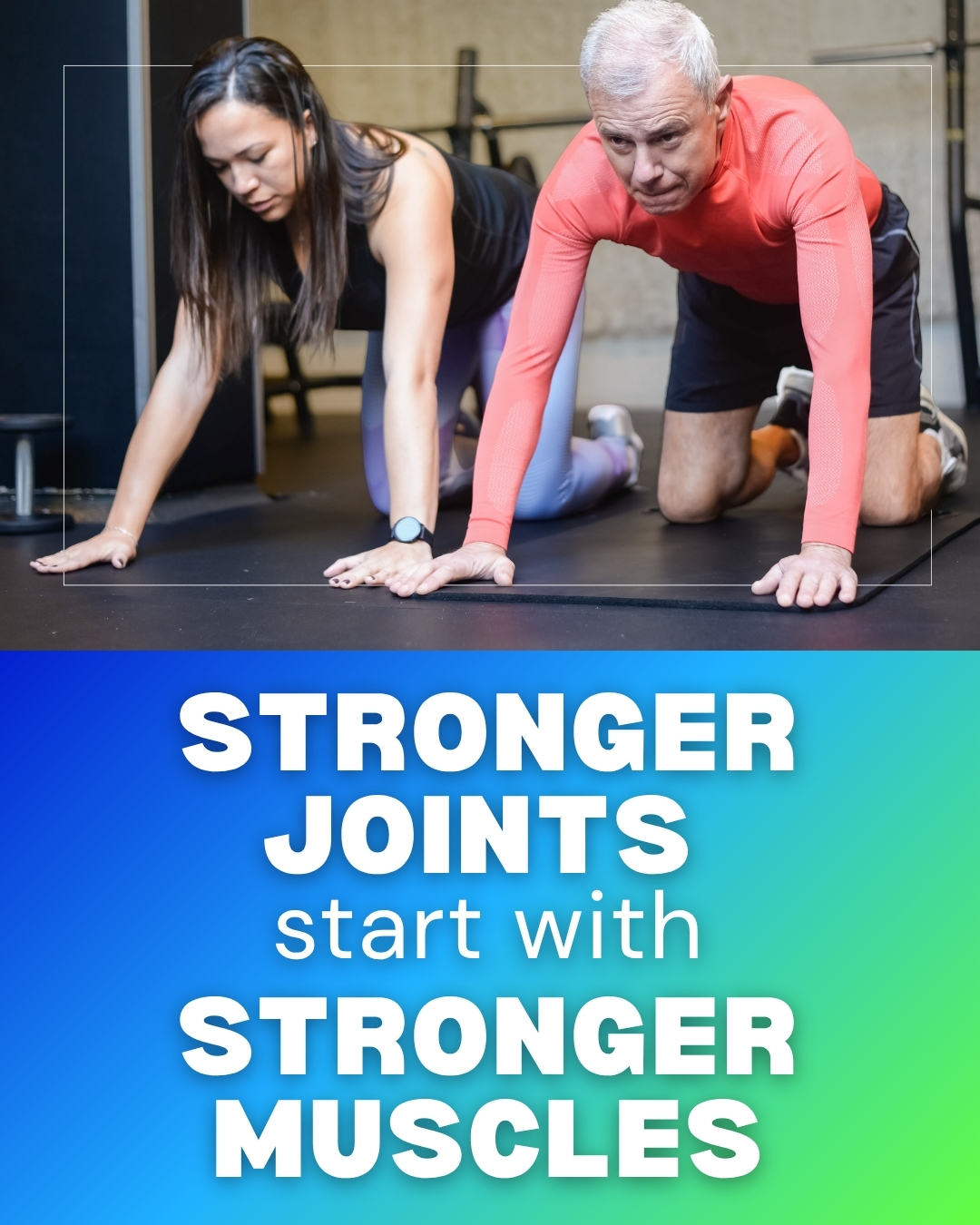
Senior Fitness and Joint Health: Why Stronger Muscles Mean Less Joint Pain
Senior Fitness and Joint Health: Why Stronger Muscles Mean Less Joint Pain
If you're worried that exercise will hurt your joints, here's some good news:
The right kind of strength training is one of the best things you can do for them.
It sounds backwards, doesn't it?
When your joints ache, it's natural to think you should protect them by moving less.
But in many cases, the opposite is true.
There's a reason healthcare professionals often say:
"Motion is lotion."
Appropriate movement helps nourish your joints, improve stability, and reduce the stress placed on them during everyday life.
Your Muscles Are Your Joints' Support System
Think of your muscles as scaffolding for your joints.
They help support, stabilize, and protect every movement you make.
For example:
Strong glutes stabilize your hips and knees.
Strong thigh muscles help absorb force when you walk or climb stairs.
A strong core supports your lower back and improves balance.
As these muscles become stronger, they absorb more of the workload that would otherwise land directly on your joints.
Less stress on the joint often means less pain.
What Research Has Found
Research suggests people who regularly perform strength training often experience less knee pain and better joint function than those who remain inactive.
For individuals living with osteoarthritis, progressive strength training has consistently been shown to reduce pain while improving mobility and daily function.
One reason many people avoid strength training is fear.
They worry they'll damage painful joints.
Ironically, properly designed strength training may be one of the best ways to help protect them.
You Don't Have to Live With Aching Joints
The right program can help you build strength safely while giving your joints the support they've been missing.
Every program is personalized to your fitness level, experience, and goals.
Why Stronger Muscles Make Such a Difference
Weak muscles—especially around the hips and thighs—force your joints to absorb more impact during everyday activities.
Standing up.
Walking.
Climbing stairs.
Even getting out of the car.
When those muscles become stronger, they provide better support and improve joint stability.
It's one of the reasons organizations like the Arthritis Foundation recommend strength training as part of a comprehensive approach to managing arthritis.
It's Not About Lifting Heavy
Many people think strength training means lifting the heaviest weights they can find.
It doesn't.
The greatest benefits come from:
Good technique
Appropriate resistance
Gradual progression
Consistency
The goal isn't to punish your body.
It's to help it move better.
If you have arthritis or previous injuries, your exercise program should be designed around your individual needs—not someone else's.
Stronger Muscles Lead to More Physical Freedom
The stronger your muscles become, the more support your joints receive.
That can make everyday activities feel easier and help you stay active doing the things you love.
Whether it's traveling, gardening, playing with grandchildren, or simply walking without discomfort, stronger muscles help make those moments possible.
It's Never Too Late to Build Stronger Joints
You're capable of more than you think—and we'd love to help you discover what's possible.
No matter where you're starting, we'll meet you where you are and help you build strength safely and confidently.
Sources
Arthritis Foundation. Strength training recommendations for people with arthritis.
Fransen M, et al. Exercise for osteoarthritis: systematic reviews published in peer-reviewed rehabilitation and rheumatology journals.
Arthritis & Rheumatology. Research examining associations between strength training, knee pain, and osteoarthritis.

Start Getting In Better Shape

Submit Your Info
Get to know each other. Learn about our program. Get a personalized plan.

Submit Your Info
Get to know each other. Learn about our program. Get a personalized plan.

Follow Our Plan
Exercise at least 3x/wk, follow our nutrition steps, communicate with your coach.
Follow Our Plan
Exercise at least 3x/wk, follow our nutrition steps, communicate with your coach.

Reach Your Goal
Love the way you look, feel strong, fit, and live more active.
Reach Your Goal
Love the way you look, feel strong, fit, and live life on your terms!
About Us
We help seniors take the guesswork out of exercise so they can achieve their fitness goals. With our coaching program, you will confidently workout, nourish your body, and stay committed to your goals, without spending a fortune on a personal trainer.
Do you want help transforming your body and fitness?
Affiliations


2024 Copyright © Desert Fitness Collective: Senior Fitness in Palm Desert
About Us
We’ll help you take the guesswork out of staying in shape so you can achieve your fitness goals. With our coaching program, you will confidently exercise, meal plan, and stay committed to your goals, without spending a fortune on a personal trainer.
Do you want help to transform your body and fitness?
Affiliations